Poirot’s false newspaper announcement
The Murder of Roger AckroydHercule Poirot’s false newspaper announcement is a calculated investigative trap: he invents a report that Ralph Paton has been found in Liverpool and is about to leave for America, then uses its appearance in print to draw out someone concealing crucial knowledge. The paragraph is not a clue about Ralph’s location but a deliberately false signal, and its first decisive result is Ursula Paton’s response: she arrives with the paper and abandons her pretence of silence.
Design and Publication
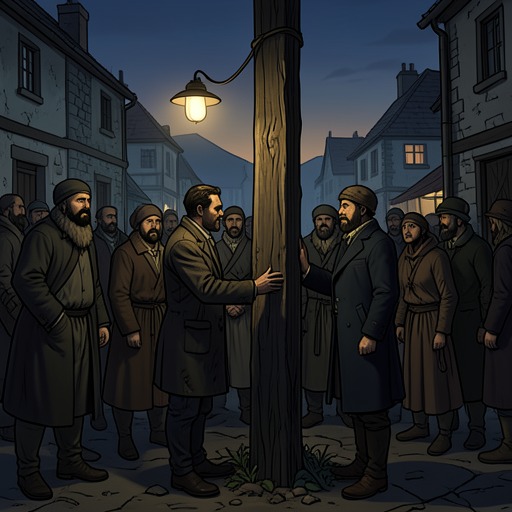
Poirot explains that he took advantage of the suspect’s mental confusion to obtain a small favour, then produces a sheet of notepaper and reads the proposed report aloud. It says that the police have been searching for Captain Ralph Paton, nephew of Roger Ackroyd of Fernly Park, whose death occurred the previous Friday, and that Ralph has been found in Liverpool while on the point of embarking for America. Poirot folds the paper away and tells his companion that the paragraph will appear in the newspapers the next morning.
The report’s detail gives its falsehood the shape of an official breakthrough. It joins the police search to a precise place, a supposed moment of discovery, and an apparent destination across the Atlantic. Each element makes the claim sound like new information from an investigation, while the named connection to Roger Ackroyd’s death keeps the announcement tightly attached to the murder case. Its plausibility is instrumental: Poirot needs people who have reason to fear Ralph’s arrest or exposure to react as though the report were true.
Poirot acknowledges that Ralph has not been found in Liverpool. Inspector Raglan was reluctant to let the paragraph go to the press because Poirot had not taken him into his confidence. Poirot promised that its publication would have interesting results, and Raglan agreed only after stipulating that he would bear no responsibility for it. The ruse is therefore not an authorized police announcement but a private investigative stratagem, carried out with the inspector’s reluctant permission and explicit distance from the claim.
The Trap in Operation
The newspaper paragraph functions by turning public print into a test of private knowledge. A person who believes Ralph is safe, hidden, or otherwise beyond the police’s reach might remain silent; a person who thinks the printed report has made further concealment useless may seek Poirot out. The false claim does not physically locate Ralph. Instead, it changes what a concealed person believes has happened and makes that person’s response available to Poirot as evidence.
The distinction between the report’s confident wording and its falsity is central to the action. Poirot’s companion immediately recognizes the contradiction, objecting that Ralph is not in Liverpool. Poirot confirms the point with evident satisfaction. The announcement’s value is thus not measured by whether it accurately describes events, but by the consequences it can provoke among those who read it. As an investigative device, it converts a fabricated public fact into a means of eliciting a genuine private disclosure.
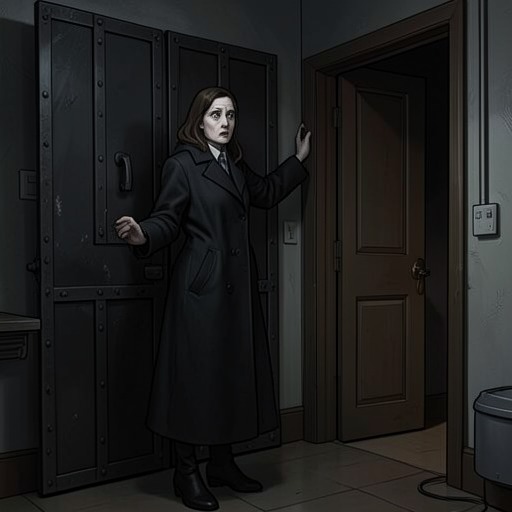
Its timing matters as well. Poirot announces that the paragraph will appear the following morning; later, Ursula comes to him holding a crumpled newspaper clipping of that very announcement. She tells him that the report says Ralph has been arrested and concludes that everything is useless and she need not pretend any longer. Though the published paragraph actually says that Ralph has been found in Liverpool and is about to embark for America, Ursula interprets it as confirmation that the authorities have caught him. That mistaken understanding, rather than the report’s literal wording, is what pushes her to speak.
Ursula Paton’s Disclosure
Ursula’s arrival supplies the trap’s concrete result. She recognizes the paragraph that Poirot had arranged to have inserted and brings the crumpled clipping as the reason for her changed course. The paper has reached her outside the private conversation in which Poirot first described his plan; its circulation has carried the deception into the life of someone whose knowledge he needs. Her statement that she need not pretend any longer marks a change from guardedness to disclosure, though at that moment she has not yet told the full story.
Poirot responds by assuring Ursula that he believes her husband innocent, while also warning that the case is proceeding badly. To save Ralph, he says, he must know everything, even information that might appear to make the case against him darker. Ursula recognizes his understanding, and Poirot asks her to tell him the whole story from the beginning. The false announcement therefore does more than bring her into the room: it opens the conversation through which she can supply information bearing on Ralph’s apparent guilt and the investigation’s next stage.
The sequence also distinguishes Poirot’s belief from proof. He believes Ralph innocent, but does not treat that belief as sufficient grounds to protect him from difficult facts. He invites complete disclosure even if it seems incriminating, making candour a condition of effective help. Ursula’s response to the newspaper creates the opportunity for that disclosure; Poirot’s assurance and insistence on the whole story then give it direction.
Narrative and Investigative Significance
As an action, the announcement is a bluff whose success depends on the gap between what the public is told and what the people closest to Ralph know. Its apparent certainty is false, but its practical effect is real: Ursula reads the report as evidence that Ralph has been arrested and approaches Poirot. The episode makes publication itself part of the investigation, using the newspaper not simply to communicate information but to manufacture a pressure under which hidden knowledge may surface.
The incident also shows Poirot controlling the circumstances in which information becomes available. He first withholds the plan from Inspector Raglan, securing permission without fully disclosing his method; then he plants a claim whose audience cannot know that it is false. The device works through unequal knowledge: Poirot knows Ralph has not been found, while Ursula sees a newspaper report and interprets it as a decisive change in the case. Her conclusion that concealment is futile is genuine, even though the event on which she bases it is invented.
The announcement’s significance lies in that reversal. It is a false report that produces a truthful response, and a supposed discovery that helps uncover information rather than establish Ralph’s whereabouts. By drawing Ursula out without directly confronting her with what she knows, Poirot turns her own reading of the paper into the mechanism of disclosure. The paragraph’s success is measured not by the truth of its claims but by the conversation it makes possible.